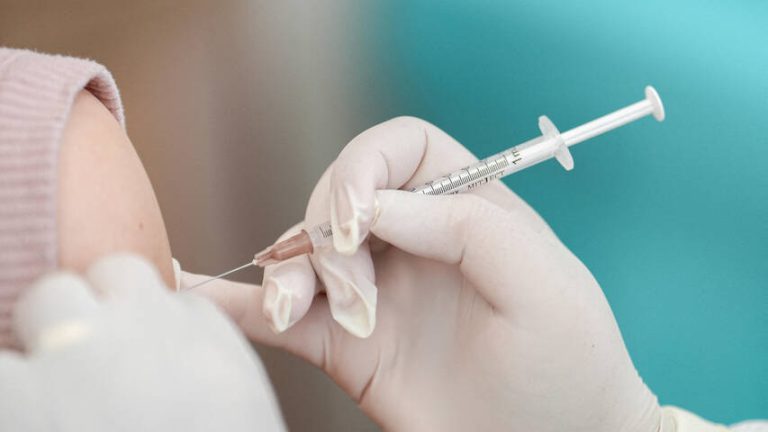
When to get the flu jab: choosing the right moment
Mid-October, November or December? The best time for your flu jab, who should get it first and how to get vaccinated at our pharmacy in Cologny.

In short
If you are wondering when to get the flu jab, aim for the period between mid-October and the start of the flu season, which in Switzerland usually begins in December or January.
- Protection builds up in about two weeks.
- In Geneva, adults aged 16 and over can be vaccinated at a pharmacy without a prescription.
Every autumn, the same question comes up at the counter of our pharmacy in Cologny: “Isn’t it a bit early?” Or, the other way round, in December: “Is it still worth it?” The answer depends less on a precise date than on how much the virus is circulating and on your own situation.
Here is what you need to know to choose the right moment, based on the recommendations of the Federal Office of Public Health (FOPH, known locally as OFSP) for the 2026–2027 season.
When should you get the flu jab in 2026?
The FOPH recommends getting vaccinated from mid-October until the start of the flu wave. In Switzerland, the epidemic most often begins between December and January and peaks in January–February, but its timing varies from year to year.
Your body needs about two weeks to produce antibodies after the injection. Ideally, then, you should be protected before the end-of-year holidays, a time when people travel, visit older relatives and the virus often starts to spread.
| Period | Our view |
|---|---|
| September – early October | A little early for most people: protection wanes over the months, so it is better to wait until mid-October. |
| Mid-October – end of November | The ideal window: you are protected before the virus arrives. |
| December | Still very worthwhile as long as the epidemic has not started or has only just begun. |
| January and later | Possible if the virus is still circulating: ask us for advice, as the decision is made case by case. |
National Vaccination Week.
In 2026, Switzerland’s National Vaccination Week runs from 2 to 7 November and from 23 to 28 November. Participating medical practices and pharmacies offer vaccination against flu, COVID-19 and RSV. Call us to find out our availability during these periods.
Flu: who is at higher risk?
The vaccine is recommended for anyone who wants to protect themselves, but the FOPH advises it first and foremost for people at risk of severe flu:
- people aged 65 and over;
- pregnant women and women who gave birth less than four weeks ago;
- babies born prematurely, up to the age of 2;
- people with a chronic illness, from 6 months of age: heart or lung disease (asthma, COPD), diabetes, kidney failure, immunity weakened by an illness or a treatment…
- residents of nursing homes (EMS) and long-term care facilities.
The vaccine is also recommended for the people around them: relatives living under the same roof, anyone caring for a baby under six months, healthcare workers and home carers. It is likewise recommended for people in regular contact with poultry or wild birds. By getting vaccinated, you avoid passing flu on to someone more vulnerable than you.
For people aged 75 and over, and for those aged 65 and over with another risk factor, the Swiss vaccination schedule favours a high-dose vaccine, better suited to an ageing immune system. Ask us whether it is right for you.
What if I am young and healthy?
Vaccination is still useful, especially if you spend time with people at risk, work with the public or would struggle to take a week off sick. Flu is not just a “bad cold”: high fever, aching muscles and exhaustion can keep you in bed for several days, and recovery sometimes takes weeks.
Does the flu vaccine work?
According to the FOPH, the vaccine’s effectiveness ranges from 20 to 80% depending on the season, the age of the person vaccinated and how well the vaccine strains match those actually circulating. It is lower in older people and in those with weakened immunity.
These figures may look modest, but they hide a significant benefit: even when a vaccinated person catches flu, the illness is generally less severe, with fewer complications such as pneumonia. That is why people are revaccinated every year: the viruses change and the vaccine’s composition is updated for each season.
Common myth.
The vaccine cannot give you flu: it does not contain any live virus. Redness at the injection site, a slightly sore arm or mild tiredness for a day or two are the most common reactions.
Where can you get a flu jab in Geneva?
You can choose between your GP and a pharmacy authorised to vaccinate. In the canton of Geneva, flu vaccination is available at pharmacies without a prescription from the age of 16. For younger children and teenagers, see your paediatrician or doctor.
As for reimbursement, the canton states that basic health insurance (LAMal, compulsory in Switzerland) only covers a vaccine given at a pharmacy with a prior medical prescription, and only when that vaccine is reimbursed for your situation (which is generally the case for people at risk). The act of vaccination at the pharmacy is not covered by basic insurance, but may be covered by some supplementary policies. Since 1 January 2026, reimbursed vaccinations are exempt from the deductible (franchise): only the 10% co-payment remains payable. From 1 January 2027, basic insurance will cover adult vaccinations given at pharmacies (vaccine and administration), under arrangements still to be confirmed. If in doubt, we will help you check.
- Check your situation. Fever on the day, a severe allergic reaction to a previous vaccination, pregnancy or immunosuppressive treatment: let us know and we will adapt the procedure.
- Book an appointment or drop in. You fill in a short health questionnaire with the pharmacist before the injection.
- Vaccination and observation. The injection takes a few seconds; we ask you to wait on site for about a quarter of an hour.
- Vaccination record. Bring your vaccination booklet so the dose can be recorded; otherwise we will give you a certificate.
Our advice at the Pharmacie de Cologny
At the counter, we advise not waiting for the first cases among the people around you: once flu is spreading through schools and offices, it is often too late to be protected in time. Set yourself a simple reminder, for example the second half of October or the first week of November.
Our team of pharmacists offers the flu vaccine in Geneva, here in Cologny, with or without an appointment depending on availability. The price is as follows: On request. We also take the opportunity of your visit to review your other vaccinations (tetanus booster, COVID-19, shingles…): find out more about our pharmacy vaccination service.
Frequently asked questions
What is the best month to get the flu jab?
In Switzerland, the FOPH recommends getting vaccinated between mid-October and the start of the epidemic. In practice, late October and November are the most favourable months: you are protected before the virus spreads widely, usually from December or January.
Is it too late to get vaccinated in December or January?
Not necessarily. As long as the flu wave is not over, the vaccine can still protect you, bearing in mind that it takes about two weeks to become immune. Ask your pharmacist or doctor for advice based on the current epidemic situation.
Can I have the flu jab and the COVID-19 vaccine on the same day?
Yes, both vaccines can in principle be given at the same visit, usually one in each arm. This is convenient for people aged 65 and over, for whom both vaccines are recommended in the autumn.
Do I need a flu jab every year?
Yes. Flu viruses change and the vaccine’s composition is updated each season. In addition, protection fades after a few months. An annual vaccination is therefore needed to stay protected.
Can pregnant women have the flu jab?
Yes, pregnancy is one of the situations in which the FOPH recommends the vaccine, because flu can be more severe during pregnancy and the vaccine also protects the newborn during its first months. Talk to your gynaecologist or midwife, who will tell you where to get vaccinated.
Is the flu vaccine reimbursed?
Basic health insurance (LAMal) reimburses the vaccine for people at risk; since 2026, it is no longer subject to the deductible, and only the 10% co-payment remains payable. At a pharmacy in Geneva, a prior medical prescription is required for this reimbursement in 2026, and the administration is not covered. From 1 January 2027, basic insurance is due to cover adult vaccinations at pharmacies, under arrangements still to be confirmed.
Sources
Vaccines & prevention
Further reading
Recommended vaccines for adults: which can you get at a pharmacy?
Tetanus, whooping cough, shingles, pneumococcus: the vaccines recommended for adults in Switzerland, age by age, and those you can get at a pharmacy.