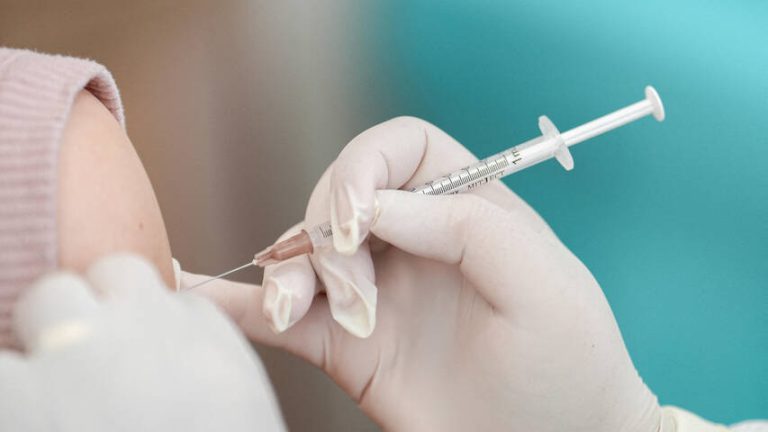
Adult vaccine boosters: which ones can you get at the pharmacy?
Tetanus, whooping cough, shingles, pneumococcus: the vaccines recommended for adults in Switzerland, age by age, and those you can get at a pharmacy.

In short
The adult vaccine boosters recommended in Switzerland are diphtheria–tetanus at 25, 45 and 65 (then every 10 years), whooping cough at 25 and, from 65, flu, COVID-19, pneumococcus and shingles.
- In Geneva, most of these vaccines can be given at a pharmacy, without a prescription, from the age of 16.
“My last tetanus booster? No idea.” That is probably the sentence we hear most often when we open a vaccination booklet at the Pharmacie de Cologny. Many adults think they are done with vaccines once they leave school, whereas the Swiss vaccination schedule provides for boosters throughout life.
The autumn flu campaign is a good opportunity to take stock. Here, age by age, are the vaccines recommended for adults in 2026 and those you can have done directly with us.
Which vaccine boosters are recommended for adults?
The Swiss vaccination schedule, published each year by the Federal Office of Public Health (FOPH, or OFSP in French) and the Federal Commission for Vaccination, distinguishes between “basic” vaccinations, recommended for everyone, and “complementary” vaccinations, which provide additional individual protection.
| Age or situation | Recommended vaccine |
|---|---|
| Age 25 | Diphtheria–tetanus booster, combined with whooping cough (dTpa) |
| Age 45 | Diphtheria–tetanus booster |
| Age 65, then every 10 years | Diphtheria–tetanus booster |
| Adults born after 1963 | Measles–mumps–rubella (MMR): 2 doses in total if not already done |
| Under 40, with no known history of chickenpox | Chickenpox: catch-up of up to 2 doses |
| Aged 20 to 26 | Human papillomavirus (HPV), complementary vaccination |
| From age 65 | Flu (every autumn), COVID-19 (every autumn), pneumococcus (single dose), shingles (2 doses) |
| From age 75 | RSV (respiratory syncytial virus), also advised from 60 in the presence of a risk factor |
| Any age, in a risk area | Tick-borne encephalitis (TBE, known in Switzerland as FSME): the whole of Switzerland except Ticino is considered a risk area |
Tetanus and whooping cough: the most often forgotten booster
In recent years, the diphtheria–tetanus booster schedule has been lightened: between the ages of 25 and 64, a booster every 20 years is enough; from 65, the interval goes back to 10 years, because antibodies last less long with age. It is the age at your last booster that sets the date of the next one.
The age-25 booster includes whooping cough (pertussis). A dose is also recommended, whatever your age, for people in regular contact with a baby under six months (fathers-to-be, grandparents looking after a baby) if their last dose was at least ten years ago, and for pregnant women in every pregnancy. Whooping cough is often mild in adults, but it can be serious for a very young child.
Lost your booklet?
Don’t worry. A catch-up is possible following precise schedules. Gather whatever documents you have (old booklets, travel certificates): we will help you piece together your vaccination status and decide what is missing.
From 65: four vaccines not to overlook
Flu and COVID-19, every autumn
These two vaccines are recommended every year for people aged 65 and over, as well as for younger people at risk (from 16 for COVID-19), ideally between mid-October and December. In 2026, the National Vaccination Weeks (2–7 and 23–28 November) make these vaccines easier to access. The COVID-19 vaccine is given no earlier than six months after the last dose or a confirmed infection. We explain the right timing in our article flu vaccine: when should you get vaccinated?.
Pneumococcus, in a single dose
Pneumococci are a common cause of pneumonia in older people. Since 2024, a single dose of a conjugate vaccine has been recommended for everyone aged 65 and over. If you have already received an older vaccine, an additional dose may be indicated: bring your booklet.
Shingles, in two doses
Shingles becomes more common and more painful with age, with a risk of persistent pain. The vaccine recommended from 65 for people with a healthy immune system is given in two doses two months apart, even if you have already had shingles or chickenpox. Specific recommendations exist for younger people whose immunity is weakened.
RSV, TBE, hepatitis B: vaccines depending on your situation
The RSV vaccine, against a winter respiratory virus, is recommended from 75 and from 60 if you have a risk factor. At present, it is not reimbursed by basic health insurance for these groups: we will tell you the cost before you make any decision.
The tick-borne encephalitis (TBE/FSME) vaccine concerns far more people than you might think: the whole of Switzerland, with the exception of Ticino, is now considered a risk area. If you walk in the woods, garden or go hiking, it is worth discussing. Finally, the hepatitis B vaccine is recommended for adults exposed to a risk (occupational, travel, personal situation).
Which vaccines can you get at a pharmacy in Geneva?
In the canton of Geneva, authorised pharmacies can vaccinate from the age of 16, without a prescription, against: flu, COVID-19, diphtheria, tetanus, whooping cough, polio, measles–mumps–rubella, chickenpox, shingles, pneumococcus, meningococcus, hepatitis A and B, tick-borne encephalitis, RSV and HPV (outside the cantonal programme).
- Bring your vaccination booklet or any record of your vaccines.
- Let us know about a pregnancy, an allergy, a treatment that weakens immunity or a blood clotting disorder.
- In 2026, for reimbursement by basic health insurance (LAMal), a prior medical prescription is required, and only the vaccine is reimbursed: the act of vaccination at the pharmacy is not covered. From 1 January 2027, basic insurance will cover adult vaccinations given at pharmacies (vaccine and administration), under arrangements still to be confirmed.
- For under-16s, see the paediatrician or family doctor.
Our advice at the Pharmacie de Cologny
The simplest way to stay up to date is to group your vaccines: a single appointment can often cover flu and a tetanus booster, or flu and COVID-19. Our pharmacists check your booklet, explain what is recommended for your age and activities, and refer you to your doctor when a situation requires it.
Find out about our pharmacy vaccination service in Cologny and, at the start of autumn, our flu vaccine in Geneva. Prices: On request for routine vaccines, On request for the vaccination consultation.
Frequently asked questions
At what age should adults have a tetanus booster?
In Switzerland, the diphtheria–tetanus booster is recommended at 25 (with whooping cough), at 45 and at 65, then every 10 years. Between 25 and 64, the interval between two boosters is therefore 20 years.
I can’t find my vaccination booklet: what should I do?
Gather the documents you have and ask your doctor whether they have a record of your vaccines. Failing that, a catch-up schedule suited to your age can be offered. We will help you take stock at the pharmacy.
Is the shingles vaccine recommended before 65?
It is generally recommended from 65 for healthy people. Earlier, it may be indicated for certain people whose immunity is weakened by an illness or a treatment: your doctor assesses this indication.
Do I need the tick vaccine if I live in Geneva?
According to the Swiss vaccination schedule, the whole of Switzerland except Ticino is considered a risk area, including the canton of Geneva since 2024. Vaccination is recommended from the age of 3 for people who live or stay there and are exposed to ticks, for example in the woods or in the garden.
Are adult vaccines reimbursed?
Vaccines included in the vaccination schedule are, as a rule, covered by basic health insurance, with a few exceptions such as the RSV vaccine for adults or travel vaccines. Since 2026, they have been exempt from the deductible (10% co-payment due). At a pharmacy in Geneva, a prior prescription is required in 2026; from 1 January 2027, basic insurance is due to cover adult vaccinations at pharmacies, under arrangements still to be confirmed.
Sources
Vaccines & prevention
Further reading
Flu vaccine: when should you get vaccinated?
Mid-October, November or December? The best time for your flu jab, who should get it first and how to get vaccinated at our pharmacy…